
Morocco Atlas Mountains & Merzouga Desert: 6-Day Itinerary
Six days is enough to link Marrakech, the High Atlas Mountains, and the Sahara dunes at Merzouga into one continuous route — but it’s a trip built around driving through changing landscapes, not one where you settle into a single place. The itinerary below runs:
Marrakech → High Atlas Mountains → Aït Ben Haddou → Dades Valley → Todra Gorge → Merzouga → Drâa Valley → Marrakech
Some of the days involve four to six hours in the car. That’s the trade-off for covering this much ground in a week: you get mountains, kasbahs, gorges, palm valleys, and open desert in a single trip, but you’re moving most days rather than staying put.
Can You Visit the Atlas Mountains and Merzouga in 6 Days?
Yes, if you’re after a highlights-focused trip rather than a slow one. Six days is a realistic window for seeing the major stops along this route — Aït Ben Haddou, the Dades Valley, Todra Gorge, and a night or two in the desert — without cutting anything essential.
It does involve long stretches on the road, particularly on the days heading out to Merzouga and back to Marrakech. A private tour helps here, since you can adjust timing, stop when something catches your eye, and skip anything that doesn’t interest your group.
Travelers who prefer a slower pace, with more time to sit still in each place rather than keep moving, might be better served by stretching the same route to 7–10 days. Six days works well for a first visit to this part of Morocco or for travelers with a fixed return flight.
6-Day Morocco Atlas Mountains and Merzouga Itinerary
Here’s the route at a glance before the day-by-day breakdown:
Day 1: Marrakech → High Atlas Mountains → Aït Ben Haddou → Ouarzazate Day 2: Ouarzazate → Skoura → Valley of Roses → Dades Valley Day 3: Dades Valley → Todra Gorge → Erfoud → Merzouga Day 4: Merzouga Desert Exploration Day 5: Merzouga → Drâa Valley → Ouarzazate/Agdz Day 6: Ouarzazate/Agdz → High Atlas Mountains → Marrakech
Day 1 – Marrakech to the High Atlas Mountains
Leaving Marrakech, the road climbs steadily into the High Atlas, crossing the Tizi n’Tichka pass at over 2,200 meters. This stretch alone changes the scenery completely — red-earth villages built into the hillsides, terraced fields, and views back over the valley as the road winds upward.
This day is more than a transit leg between two points. The mountain villages along the pass, many built from the same earthen construction used for centuries in this region, are worth slowing down for if your driver has flexibility in the schedule.
By late afternoon, most itineraries reach Aït Ben Haddou, the fortified village recognizable from a number of film productions, before continuing a short distance to Ouarzazate for the night.
Day 2 – Ouarzazate to Dades Valley
From Ouarzazate, the route heads toward Skoura, a palm oasis with old kasbahs scattered among the palm groves — a useful stop for a walk before continuing.
The road then passes through the Valley of Roses, particularly notable in spring when the rose harvest is underway, before reaching Boumalne Dades and the Dades Gorge itself, where the landscape shifts again into steep rock formations carved by the river below.
The contrast across this single day is worth noting: palm oasis in the morning, rose-growing valley by midday, and dramatic gorge scenery by the time you stop for the night.
Day 3 – Dades Valley to Merzouga
This is the day most travelers are waiting for. The route passes through Todra Gorge, where the canyon walls narrow to a few hundred meters apart in places, before continuing through Erfoud and Rissani toward Merzouga.
Arrival in Merzouga typically means switching from the vehicle to camels for the final stretch into the dunes at Erg Chebbi. The ride out is timed for sunset, when the light shifts the color of the sand from pale gold to a deeper orange.
Dinner at the camp is usually a set menu, often followed by music around a fire. After dark, with minimal light pollution out here, the sky fills with far more stars than most travelers are used to seeing. It’s a straightforward evening rather than an elaborate one, and that’s part of what makes it work.
Day 4 – Merzouga Desert Experience
Spending a full day around Merzouga, rather than just passing through, is what keeps this itinerary from feeling rushed. Many travelers start with sunrise over the dunes, since the early light is a different experience from sunset the night before.
From there, options include a 4×4 excursion into the surrounding desert, a stop in Khamlia to hear Gnawa music performed by local musicians, a visit to nomadic communities where this has been appropriately arranged in advance, sandboarding on the dunes, or a return trip into Rissani for its market and old town.
Not every traveler needs to fit in all of these. Some spend the day active and moving between activities; others use it to rest at the camp after two long driving days. Both are reasonable ways to use the time.
Day 5 – Merzouga to the Drâa Valley
The return journey typically heads back through Rissani, sometimes with a detour toward Alnif or N’Kob, before joining the Drâa Valley route toward Agdz.
The Drâa Valley is worth paying attention to rather than treating as a pass-through. It’s Morocco’s longest river valley, lined with palm groves and old kasbahs, and the landscape here feels distinct from both the desert behind you and the mountains ahead.
Depending on timing, the overnight stop lands in Agdz or continues on to Ouarzazate.
Day 6 – Drâa Valley to Marrakech
The final day retraces familiar ground — back through Ouarzazate, over the High Atlas via Tizi n’Tichka, and down into Marrakech.
It’s another substantial driving day, generally five to six hours depending on stops, so it’s worth keeping expectations realistic rather than planning much else for the afternoon you arrive back.
Can You Start This 6-Day Itinerary From Casablanca?
Casablanca works as an arrival point, since it has Morocco’s main international airport, but the route itself needs adjusting rather than simply being copied from Marrakech.
Most travelers arriving in Casablanca either transfer to Marrakech first and start the itinerary above from there, or arrange a private tour that begins in Casablanca and folds Marrakech into the first day or two of driving.
Either way, starting from Casablanca adds travel time to the front of the trip. If you’re working with exactly six days, it’s worth factoring that in — some travelers extend to seven days specifically to absorb the Casablanca-to-Marrakech leg without cutting into the desert portion.
Can You Start the Itinerary From Rabat?
Rabat can also serve as a starting point, with a similar logic to Casablanca: travel to Marrakech first, then follow the itinerary above.
Rabat → Marrakech → Atlas Mountains → Merzouga
For a six-day trip specifically, it’s worth being cautious about adding too many northern stops before heading south. The desert journey already involves several long driving days on its own, and stacking additional cities on top tends to turn a six-day trip into something that feels rushed rather than enjoyable.
Can You Start From Agadir?
Agadir is possible, but it doesn’t connect neatly with the Marrakech Atlas Mountains route described above. Travelers starting from Agadir can head into southern Morocco and continue toward the desert, but the road geography is different enough that the itinerary needs real adjustment rather than a copy-paste of the Marrakech version.
If Agadir is your starting point, it’s worth discussing the route directly with a driver or operator familiar with that specific connection, rather than assuming the standard Marrakech itinerary will apply.
Can You Start From Tangier?
Tangier sits much farther north, and a six-day trip from there that still includes the Atlas Mountains and Merzouga would mean considerably more driving than the itinerary above.
Travelers starting in Tangier are usually better off with one of a few adjustments: extending the total trip length beyond six days, planning a one-way route rather than looping back to the starting city, or flying or taking the train down to Marrakech first and starting the desert portion from there. Trying to force the full route into six days from Tangier tends to mean too much time in the car and not enough anywhere else.
Atlas Morocco Tours and Desert Experiences
Beyond the specific itinerary above, there are a few different ways travelers typically approach combining the Atlas Mountains with the Sahara.
Private tours offer the most flexibility — your own vehicle, adjustable stops, and a pace set by your group rather than a fixed schedule.
Small-group tours cost less than private options while still following a structured itinerary, generally suiting travelers comfortable sharing the trip with a handful of others.
Luxury tours add better hotels along the route, private transportation, and upgraded desert camps with private tents and bathrooms.
Adventure-focused tours lean more into hiking in the Atlas foothills, 4×4 exploration in the desert, and other outdoor activities rather than a straightforward point-to-point route.
Which type suits you depends mostly on budget and how much you want the trip organized around comfort versus activity.
Why Combine the Atlas Mountains With the Sahara Desert?
These two parts of Morocco don’t resemble each other at all, which is exactly why so many itineraries link them together.
The Atlas Mountains bring mountain scenery, river valleys, mud-brick villages, high passes, and — for travelers with extra time — genuine hiking opportunities. Merzouga brings the opposite: open desert, the dunes of Erg Chebbi, camel trekking, and a horizon with nothing built on it.
Seeing both within one trip means experiencing two landscapes that have almost nothing in common, connected by a single road. That contrast is a big part of why this particular route gets planned so often.
Best Time for This 6-Day Morocco Itinerary
Spring (March to May) brings mild temperatures in the mountains and manageable heat in the desert, making it one of the more comfortable windows for this route.
Autumn (September to November) offers similar conditions, with the desert heat easing from summer highs.
Winter (December to February) can mean genuinely cold nights in both the mountains and the desert — sometimes near freezing in Merzouga — so warm layers matter more in this season than people expect.
Summer (June to August) brings high heat in the desert, often above 40°C (104°F) during the day, though the mountain sections of the route stay somewhat cooler by comparison.
No single season is ideal for every traveler — it depends on whether cold nights or hot days are the bigger concern for you.
What Should You Pack?
A few practical items cover most of what this trip requires: comfortable walking shoes for uneven ground at stops like Aït Ben Haddou and Todra Gorge, layered clothing that works for both mountain and desert temperature swings, a genuinely warm layer for desert evenings, sun protection including sunglasses and a hat, a refillable water bottle, a portable charger for long driving days, and a small overnight bag for the night in the desert camp, since larger luggage typically stays with the vehicle.
Is a Private 6-Day Morocco Tour Worth It?
Private travel tends to work well for couples, families, groups of friends, and anyone with specific interests they want to build extra time around — whether that’s photography stops, a longer visit to a particular gorge, or simply not wanting to keep pace with strangers.
Shared or small-group tours remain a reasonable choice for travelers prioritizing cost over flexibility. You’ll follow a fixed schedule and share the vehicle, but you’ll see the same major stops for less money.
Neither option is inherently better — it comes down to whether flexibility or price matters more for your trip.
FAQ
Is six days enough for Morocco? It’s enough to cover a highlights route through the Atlas Mountains and Merzouga, though it won’t allow much time in any single place. Travelers wanting a slower pace might prefer extending to 7–10 days.
Can I visit the Atlas Mountains and Sahara in six days? Yes, this is one of the most common ways to combine both regions in a single trip from Marrakech.
How far is Merzouga from Marrakech? Around 560 kilometers by road, generally split across two to three days of driving with stops along the way rather than done in one stretch.
Can I start a Morocco desert tour from Casablanca? Yes, either by transferring to Marrakech first or arranging a private tour that begins in Casablanca and includes the extra travel time.
Can I start from Rabat? Yes, following a similar approach — travel to Marrakech first, then continue with the standard itinerary.
Can I start from Agadir? It’s possible, but the route needs real adjustment rather than copying the Marrakech itinerary directly.
Can I start from Tangier? It’s a much longer journey from Tangier, so a longer trip, a one-way route, or flying to Marrakech first tends to work better than forcing everything into six days.
Is Merzouga worth visiting? For most travelers, yes — the dunes, camel trek, and night sky offer something genuinely different from the rest of Morocco. Those with very limited time may need to weigh it against other priorities.
How many nights should I spend in the Sahara? One night is standard on a six-day itinerary; two nights give more breathing room if your schedule allows it.
What is the best Atlas Mountains and desert tour in Morocco? It depends on your priorities — private tours suit those wanting flexibility, small-group tours suit tighter budgets, and luxury tours suit those wanting more comfortable accommodation along the way.
Plan Your Morocco Atlas Mountains and Merzouga Adventure
The itinerary above is a starting point rather than a fixed template. It can be adjusted around your starting city, the number of people traveling, the accommodation level you want, particular interests like hiking or photography, your flight schedule, and whether you’d rather travel privately or as part of a small group.
If you’re working out how this route fits your own trip, it’s worth requesting a personalized itinerary — a driver or operator familiar with this route can adjust the pacing and stops to match what you’re actually looking for, rather than following a generic plan.
Best Morocco Atlas Mountains & Merzouga Desert: 6 Day Itinerary
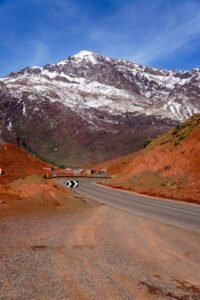
A realistic 6 day Morocco Atlas Mountains and Merzouga desert itinerary from Marrakech, plus how to adapt it from Casablanca, Rabat, Agadir.
Product Brand: Get Morocco Vacation
Product Currency: €
Product Price: From 900
Product In-Stock: InStock
5
[…] short version: don’t expect to see the Sahara as a day trip from Marrakech. Budget at least two to three days minimum, and more if you want to enjoy the stops along the way […]
[…] Families generally do better with a private driver rather than public transport or a shared tour, partly for flexibility and partly because young kids don’t always tolerate a packed schedule. Practical adjustments for a family itinerary: […]
[…] Best Morocco Atlas Mountains & Merzouga Desert: 6 Day Itinerary 0SharesPrevNext 1 Response […]
[…] that shapes daily life here, and a long-running arts and music scene that goes back decades. Where Marrakech pulls you into souks and squares that never really quiet down, Essaouira lets you slow down — you […]
[…] for sightseeing, less fatigue from a single long stretch behind the wheel, a better look at the Middle Atlas landscape in daylight, more chances for photography, and a more relaxed arrival in Merzouga rather […]