
Atlas Mountains Map 2027
If you are planning a trip to Morocco, an Atlas Mountains map is one of the best tools to understand the country’s geography. The Atlas Mountains stretch across Morocco and form a spectacular natural divide between the greener northern regions and the Sahara Desert farther south.
From the dramatic peaks of the High Atlas to the cedar forests of the Middle Atlas and the rocky landscapes of the Anti-Atlas, each area offers a different experience.
This guide explains where the Atlas Mountains are, how the different ranges connect, the best places to visit, and how to plan a road trip through the mountains in 2027.
Atlas Mountains Map of Morocco
The Atlas Mountains run across a large part of Morocco, extending eastward into Algeria and Tunisia.
In Morocco, the mountains are generally divided into three major ranges:
- High Atlas Mountains – the highest and most dramatic range
- Middle Atlas Mountains – greener and known for forests and lakes
- Anti-Atlas Mountains – older, drier and more rugged
The High Atlas is particularly important for travelers because it sits between Marrakech and the Sahara Desert, making it a natural part of many Morocco itineraries.
When looking at a map, you can see how several famous destinations connect through the mountain region, including Marrakech, Imlil, Ouarzazate, Aït Benhaddou, the Dades Valley, and the road toward Merzouga.
Customize Your Tour With Mustapha
Where Are the Atlas Mountains in Morocco?
The Atlas Mountains are located mainly in central and southern Morocco.
The High Atlas rises south of Marrakech, home to some of Morocco’s highest peaks. From Marrakech, travelers can reach mountain valleys and villages within a relatively short drive.
The mountains then continue eastward toward the Ouarzazate region and the desert landscapes of southeastern Morocco.
This location makes the mountains especially important for travelers taking a route such as:
Marrakech → High Atlas → Aït Benhaddou → Ouarzazate → Dades Valley → Todra Gorge → Merzouga
The landscape changes dramatically along this route. Marrakech’s busy streets give way to mountain passes, valleys, kasbahs, palm-filled oases and eventually the Sahara.
The Three Atlas Mountain Ranges
Understanding the different ranges makes it much easier to plan a Morocco trip.
High Atlas Mountains
The High Atlas is the highest section of the Atlas system and the most popular area for trekking and mountain adventures.
It includes Mount Toubkal, which rises to 4,167 meters and is the highest mountain in North Africa.
Popular places include:
- Imlil
- Toubkal National Park
- Oukaimeden
- Ourika Valley
- Ouirgane
- Tizi n’Tichka Pass
- Aït Bouguemez
The scenery ranges from green valleys and traditional villages to rocky peaks and snow-covered mountains during winter.
For visitors staying in Marrakech, the High Atlas is also one of the easiest mountain regions to include in a short itinerary.

Middle Atlas Mountains
The Middle Atlas lies farther northeast and has a greener, more alpine character.
This region is known for:
- Cedar forests
- Mountain lakes
- Waterfalls
- Traditional Berber villages
- Barbary macaques
- Cooler temperatures
- Ifrane, Azrou and the surrounding cedar forests are among the best-known destinations.
The Middle Atlas is particularly attractive during spring and summer when the landscapes are green, and temperatures are generally more comfortable than in Morocco’s desert regions.
Anti-Atlas Mountains
The Anti-Atlas is located farther south and southwest.
Compared with the High Atlas, the landscape is generally drier and more rugged. Rocky mountains, dramatic valleys, and desert-like scenery dominate much of the region.
The Anti-Atlas is less visited than the High Atlas, making it an interesting option for travelers looking for quieter landscapes and a more off-the-beaten-path experience.
High Atlas Mountains Map: Main Places to Know
If your main interest is the High Atlas Mountains map, there are several destinations worth identifying before planning your route.
Imlil
Imlil is one of the most famous mountain villages near Marrakech and is widely used as a starting point for treks toward Mount Toubkal.
It is surrounded by steep valleys, walnut trees, terraced fields and traditional villages.
Mount Toubkal
Mount Toubkal is the highest peak in North Africa.
The standard ascent normally takes more than one day and requires good physical preparation. Weather conditions can change quickly, particularly at higher elevations.
Ourika Valley
The Ourika Valley is one of the most accessible mountain destinations from Marrakech.
It is popular for day trips, village walks, riverside restaurants and the Setti Fatma waterfalls.
Oukaimeden
Oukaimeden is Morocco’s best-known ski area and sits at high elevation in the High Atlas.
During winter, snow can transform the landscape, while summer offers hiking opportunities and spectacular mountain scenery.
Tizi n’Tichka Pass
Tizi n’Tichka is one of Morocco’s most famous mountain passes.
The road connects Marrakech with the Ouarzazate region and crosses the High Atlas through dramatic mountain scenery.
It is an important part of many Marrakech-to-Sahara road trips.
8 Best Places to Visit in the Atlas Mountains
1. Ourika Valley
Ourika is one of the easiest mountain escapes from Marrakech.
The valley combines mountain scenery, small villages, rivers and hiking opportunities. It is particularly popular as a day trip.
2. Imlil
Imlil is ideal for travelers interested in hiking and experiencing traditional mountain villages.
It is also the main gateway for many Mount Toubkal treks.
3. Aït Benhaddou
Aït Benhaddou is a historic fortified village, or ksar, near Ouarzazate.
Its earthen architecture and dramatic setting have made it one of Morocco’s most recognizable landmarks.
The site has also appeared in several major film and television productions.
4. Ouirgane Valley
Ouirgane offers a quieter alternative to some of the busier mountain destinations.
The valley is surrounded by red earth, olive trees and mountain scenery, making it a good choice for travelers looking for relaxation and local hospitality.
5. Ouzoud Waterfalls
Ouzoud Falls are among Morocco’s most famous waterfalls.
The falls drop approximately 110 meters and are surrounded by green vegetation and steep cliffs.
They can be visited as a day trip from Marrakech, although the journey is longer than the drive to the nearby High Atlas valleys.
6. Aït Bouguemez Valley
Known as the Happy Valley, Aït Bouguemez is famous for its green agricultural landscapes, traditional villages and mountain scenery.
It is a good choice for travelers who want a slower and more authentic mountain experience.
7. Dades Valley and Todra Gorge
The Dades Valley and Todra Gorge are located farther east, where the landscape begins transitioning toward southeastern Morocco.
Red-rock cliffs, dramatic canyons and palm-filled valleys make this region particularly popular with photographers and road-trip travelers.
8. Telouet
Telouet is home to the remains of the historic Telouet Kasbah.
The village sits along an old route through the High Atlas and can be combined with a visit to Aït Benhaddou.
Atlas Mountains Road Trip from Marrakech
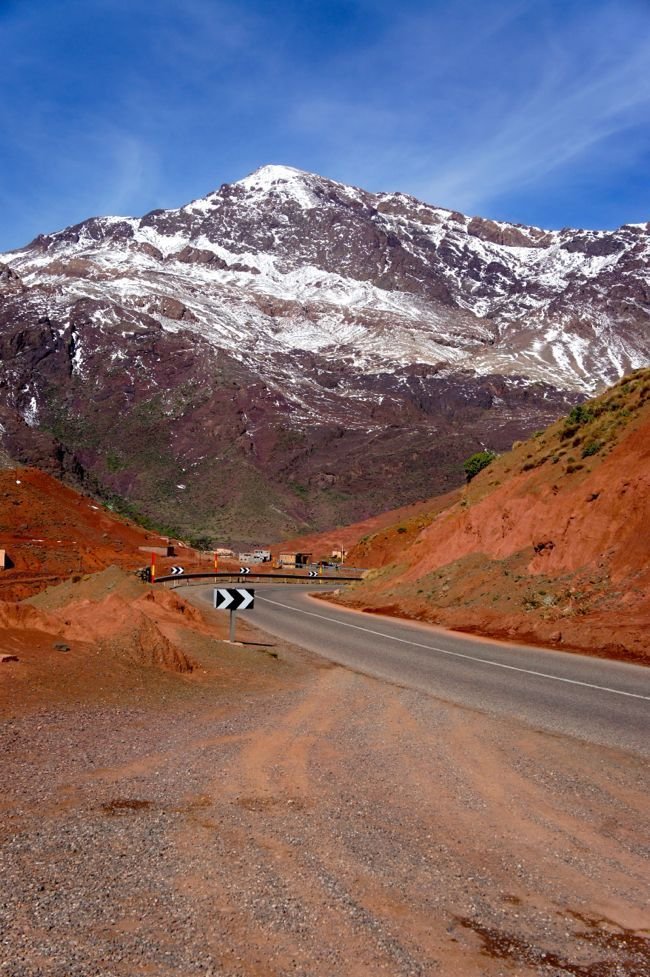
One of the best ways to experience the mountains is by road.
A popular route is:
Marrakech → Tizi n’Tichka → Telouet → Aït Benhaddou → Ouarzazate → Skoura → Dades Valley → Todra Gorge
From there, travelers can continue toward the Draa Valley and the Sahara.
A longer itinerary can continue:
Todra Gorge → Merzouga → Sahara Desert
This route combines mountains, valleys, kasbahs, gorges, and desert landscapes in one journey.
How Many Days Do You Need?
A short mountain experience can be done in one day from Marrakech.
However, travelers who want to combine the Atlas Mountains with Aït Benhaddou, Ouarzazate, and the desert should allow at least 3-4 days.
For a more relaxed experience, 5 to 7 days allows more time for hiking, villages and scenic stops.
Best Atlas Mountains Treks
The Atlas Mountains offer hiking opportunities for almost every fitness level.
Easy Mountain Walks
Visitors staying around Ourika, Imlil or Ouirgane can find shorter walks through valleys and villages.
These are suitable for travelers who want mountain scenery without committing to a multi-day trek.
Mount Toubkal Trek
For experienced hikers, Mount Toubkal is the region’s most famous challenge.
The climb is physically demanding even though it does not normally require technical climbing skills under normal conditions.
Weather, altitude and trail conditions should always be considered before starting the trek.
M’Goun Massif
The M’Goun region offers a more remote trekking experience.
It is particularly attractive to experienced hikers looking for quieter trails, traditional villages and dramatic mountain landscapes.
For multi-day trekking, using a qualified local guide is strongly recommended.
Best Time to Visit the Atlas Mountains
The best time depends on what you want to do.
Spring: April to May
Spring is one of the most beautiful periods in the mountains.
Valleys become greener, wildflowers appear, and temperatures are generally comfortable for hiking.
Summer: June to August
Higher elevations can remain pleasant during summer, although lower valleys can become very hot.
Early mornings are generally better for hiking.
Autumn: September to October
Autumn offers comfortable temperatures, clear skies, and beautiful agricultural landscapes.
It is another excellent season for road trips and trekking.
Winter: November to March
Winter brings snow to the higher parts of the High Atlas.
Oukaimeden can offer winter sports, while lower-altitude destinations may remain accessible.
Road conditions can change quickly after heavy snowfall, so check conditions before traveling through mountain passes.
How to Get Around the Atlas Mountains
There are several ways to explore the region.
Private Driver
A private driver is one of the most comfortable options, especially for families and travelers visiting multiple destinations.
It allows you to stop at viewpoints, villages and attractions along the way.
Rental Car
A rental car provides more independence.
The main roads between Marrakech, Ouarzazate and other major destinations are suitable for normal vehicles, but some rural mountain roads can be rough or narrow.
Always check the road conditions before taking remote routes.
Grand Taxi
Grand taxis are commonly used for transportation between towns and villages.
They can be inexpensive but are less convenient for travelers carrying luggage or planning multiple sightseeing stops.
Local Mountain Guide
For trekking, a local guide can improve both safety and the overall experience.
A guide can help with navigation, weather conditions, mountain trails, and communication with local communities.
Where to Stay in the Atlas Mountains
Staying overnight is one of the best ways to experience the mountains.
Instead of returning to Marrakech every evening, consider staying in:
- Family-run guesthouses
- Mountain gîtes
- Traditional riads
- Small mountain hotels
- Rural lodges
A stay in a village can provide a much more authentic experience than simply visiting for a few hours.
Many accommodations also serve homemade Moroccan meals, including tagine, couscous, fresh bread and mint tea.
Atlas Mountains Food to Try
Food is an important part of the mountain experience.
Look for traditional dishes such as:
- Berber omelet
- Chicken or vegetable tagine
- Couscous
- Fresh mountain bread
- Amlou
- Mint tea
- Seasonal fruit and nuts
In mountain villages, meals are often simple but flavorful, with ingredients sourced locally.
Photography Tips for the Atlas Mountains
The Atlas Mountains are excellent for landscape and documentary photography.
Early morning and late afternoon usually provide the most attractive natural light.
A wide-angle lens is useful for capturing valleys and large mountain landscapes, while a telephoto lens can compress distant mountain layers.
If you are photographing villages or local people, always be respectful and ask permission before taking close-up portraits.
For sunrise and winter photography, carry extra batteries and dress in layers because temperatures can drop significantly at higher elevations.
Responsible Tourism in the Atlas Mountains
The mountain communities are an important part of the travel experience.
Responsible tourism can help local communities benefit directly from visitors.
Consider:
- Hiring local guides
- Staying in locally owned accommodation
- Eating at village restaurants
- Buying handmade products directly from artisans
- Avoiding unnecessary plastic waste
- Respecting local customs
- Asking before photographing people
Traveling slowly and spending money locally can make a meaningful difference to mountain communities.
Atlas Mountains Travel Tips
Before leaving Marrakech, prepare for changing conditions.
Bring:
- Comfortable walking shoes
- Layers of clothing
- Sunscreen
- Sunglasses
- Water
- Snacks
- A power bank
- Offline maps
- Basic first-aid supplies
Mountain weather can change quickly, so do not rely only on the temperature in Marrakech when planning your clothing.
If you are driving, download offline navigation before leaving the city. Mobile coverage can become unreliable in remote valleys.
Explore the Atlas Mountains with a Local Guide
Want to experience the Atlas Mountains without worrying about driving, routes, and accommodation?
Get Morocco Vacation offers private Morocco tours that combine the High Atlas Mountains with destinations such as Aït Benhaddou, Ouarzazate, the Dades Valley, Todra Gorge and the Sahara Desert.
Private itineraries can be adapted for couples, families and small groups, allowing you to travel at your own pace and spend more time at the places that interest you most.
For travelers starting in Marrakech, combining the Atlas Mountains with a Sahara Desert tour is one of the best ways to experience Morocco’s changing landscapes in a single trip.
Frequently Asked Questions
How far are the Atlas Mountains from Marrakech?
The nearest foothills are less than an hour from Marrakech, while popular destinations such as Imlil generally take around 1.5 hours by road, depending on traffic and the exact starting point.
What is the highest mountain in the Atlas Mountains?
Mount Toubkal is the highest peak in the Atlas Mountains and in North Africa, reaching approximately 4,167 meters above sea level.
Can you visit the Atlas Mountains without hiking?
Yes. You can explore mountain valleys, villages, viewpoints, waterfalls, and scenic roads without doing a strenuous trek.
Can I visit the Atlas Mountains and Sahara Desert on the same trip?
Absolutely. The High Atlas is located along one of the most popular routes between Marrakech and southeastern Morocco.
A route through the High Atlas, Aït Benhaddou, Ouarzazate and the Dades Valley can continue to Merzouga and the Sahara Desert.
What is the best part of the Atlas Mountains to visit from Marrakech?
The High Atlas is generally the easiest choice for travelers based in Marrakech. Imlil, Ourika Valley, Ouirgane and the Tizi n’Tichka route are among the most popular options.
Is it safe to travel in the Atlas Mountains?
The main tourist areas are generally suitable for visitors, but mountain conditions can change quickly. For trekking, use appropriate equipment and consider traveling with a qualified local guide.
Final Thoughts
The Atlas Mountains are much more than a mountain range on a map.
They connect some of Morocco’s most memorable landscapes, from the green valleys surrounding Marrakech to snow-covered High Atlas peaks, ancient kasbahs, dramatic gorges and the desert beyond.
Using an Atlas Mountains map to understand the geography makes it much easier to plan your route and decide which places deserve more time.
Whether you want to hike around Imlil, photograph mountain villages, drive across Tizi n’Tichka, explore Aït Benhaddou or continue toward the Sahara, the Atlas Mountains can become one of the highlights of your Morocco adventure.
[…] Explore Atlas Mountains and Imlil […]
[…] is possible, but it doesn’t connect neatly with the Marrakech Atlas Mountains route described above. Travelers starting from Agadir can head into southern Morocco and continue […]