
What to Do in Essaouira Morocco
If you’re wondering what to do in Essaouira, Morocco, the short answer is: walk the medina walls at sunset, eat grilled fish by the port, browse a few art galleries, and if the wind is up, watch the kitesurfers on the beach. Essaouira is a working Atlantic port city with a fortified old town, and most of what makes it worth visiting comes from that combination — history you can touch, a coastline that’s genuinely used by fishermen and surfers rather than just photographed, and a pace that’s noticeably slower than Marrakech, an hour and a half up the road.
What sets Essaouira apart isn’t a single landmark. It’s the mix of a UNESCO-listed medina, a still-functioning fishing port, near-constant coastal wind that shapes daily life here, and a long-running arts and music scene that goes back decades. Where Marrakech pulls you into souks and squares that never really quiet down, Essaouira lets you slow down — you can see most of the old town on foot in a day, then spend a second day doing very little at all.
This guide covers what to actually do here: the medina, the ramparts, the port, the beach, food, day trips, and how to decide whether one day is enough or whether you should stay longer.
What Is Essaouira Known For?
Essaouira built its reputation on a handful of things that still define it today.
The medina is the historic walled core of the city, recognized as a UNESCO World Heritage Site for its blend of European military architecture and North African urban planning. The ramparts and sea bastions (locally called Skalas) still ring much of the old town and face directly onto the Atlantic. The fishing port remains active — this isn’t a museum piece; it’s where a good portion of the local catch still comes in every morning. That catch feeds into a food scene built around fresh seafood, grilled right at the port or served in small restaurants nearby.
Beyond the water, Essaouira has a long-standing arts and craft tradition, particularly woodworking with local thuya wood, along with a cluster of galleries showing contemporary Moroccan art. Music matters here too, most visibly through Gnawa traditions and the annual festival built around them. And the same coastal wind that can make an afternoon on the beach feel brisk is exactly what’s made the area a serious destination for surfing, windsurfing, and kitesurfing.
Together, these give Essaouira a different rhythm than Morocco’s inland cities — more relaxed, more maritime, and built around a coastline you’re meant to actually use.
Best Things to Do in Essaouira Morocco
1. Explore the Essaouira Medina
The medina is where most visits start, and reasonably so. It’s compact enough to explore without a map for long and laid out on a grid that’s more orderly than the medinas of Fes or Marrakech, a legacy of its 18th-century design by French military engineers.
Walking through it, you’ll pass workshops where craftsmen are visibly making things — inlaid wood boxes, leather goods, textiles — rather than just selling them. There are small cafés tucked into side streets where you can sit with a coffee and watch the street, art galleries occupying old riad buildings, and stretches of wall and gatework that show the medina’s mixed Moroccan and European architectural history plainly, without needing a plaque to explain it. The main street, Avenue de l’Istiqlal, runs through the middle and connects most of what you’ll want to see, but the smaller alleys off it are where the medina’s character actually shows up.
2. Walk Along the Ramparts and Skala
Essaouira’s ramparts are one of the more physically striking things about the city, largely because you can walk directly on top of them. The Skala de la Kasbah, on the northern edge of the medina, is the most visited stretch — a sea-facing bastion lined with old bronze cannons, many donated by European traders, looking straight out over the Atlantic. It’s a good spot for photos, but it’s also just a good place to stand for a few minutes and look at the water and the rocky coastline below.
The Skala du Port, near the harbor, is a separate fortification with its own set of cannons and a different angle on the port and the offshore islands. Both are worth visiting, and both are free or low-cost to access, with no need to book anything in advance.
3. Visit the Fishing Port
The port sits just outside the medina walls and is worth visiting on its own terms — not dressed up, just as a working harbor. Blue wooden fishing boats come and go throughout the morning, and if you’re there at the right time, you’ll see the day’s catch being unloaded, sorted, and sold directly on the dockside.
It’s worth being clear-eyed about this: it’s an active industrial space, with the smell, noise, and mess that comes with any fishing harbor, not a curated attraction. That’s part of what makes it worth seeing — this is where a meaningful share of the city’s food and economy actually comes from, not a recreation of it.
4. Eat Fresh Seafood
Seafood is the most reliable thing to eat in Essaouira, largely because of that port. Right at the harbor, there are stalls where you can pick fish and shellfish and have it grilled on the spot — a straightforward, casual way to eat that most visitors end up trying at least once.
In town, there are more sit-down restaurants serving grilled or fried fish, sardines, and other seafood, along with the usual range of Moroccan dishes. A couple of practical points: stick to places that are busy, since turnover is usually a decent sign of freshness, and it’s reasonable to confirm prices before ordering, especially at the port stalls where menus aren’t always posted.
5. Spend Time at Essaouira Beach
The beach stretches south of the medina for a long way, and it’s genuinely good for walking, especially at low tide when the sand flattens out and extends toward the water. It’s also a reasonable spot to just sit, watch the fishing boats or surfers, and take in the sunset.
Worth knowing going in: Essaouira isn’t a sheltered, calm-water beach destination in the way some resort towns are. The wind that makes the area good for water sports also means it can be cool and blustery on the sand, even when it’s sunny. If you’re picturing a still, warm swimming beach, temper that expectation — this coastline is more about movement, wind, and open space than calm lounging.
6. Try Surfing, Kitesurfing or Windsurfing
Essaouira’s wind is a defining feature of the place, and it’s turned the coastline into one of Morocco’s main destinations for board sports. Surfing is possible directly on Essaouira’s beach depending on conditions, while windsurfing and kitesurfing tend to be stronger further along the coast, particularly around Sidi Kaouki to the south and Moulay Bouzerktoun to the north — both well-known spots for consistent wind.
In town, several schools are available that provide rental equipment and beginner lessons. If you’re new to these sports, I’d highly recommend seeking guidance from a qualified instructor instead of trying to figure things out on your own—the wind and currents here can be quite challenging for first-timers.
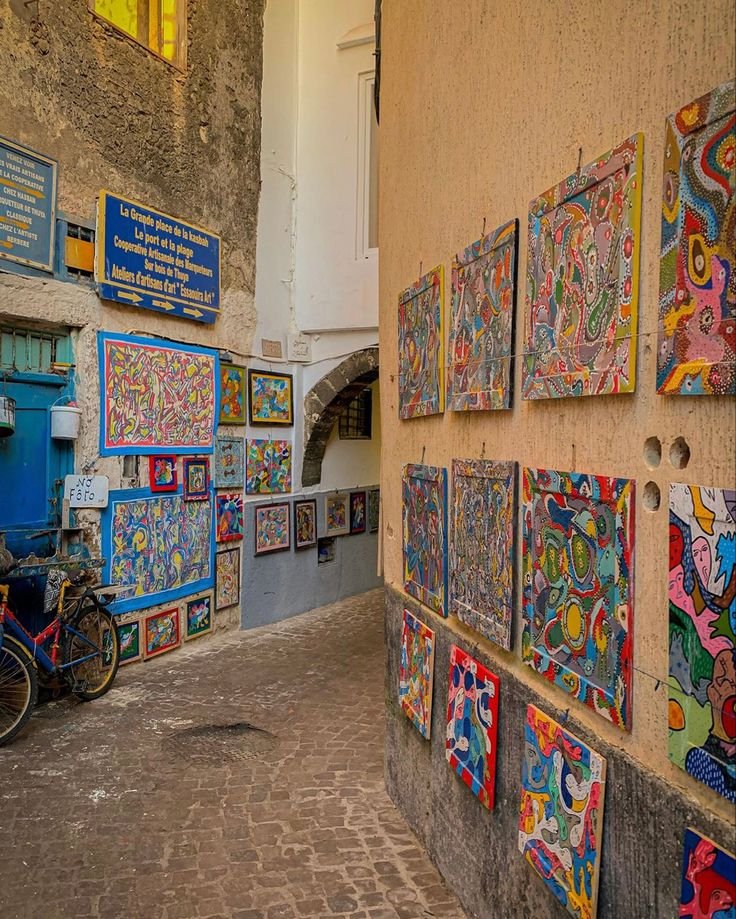
7. Discover Essaouira’s Art Galleries and Crafts
Essaouira has a real artistic identity that goes beyond souvenir shops. The city has attracted painters and craftspeople for decades, and that’s visible today in a cluster of small galleries scattered through the medina, many showing contemporary Moroccan artists rather than mass-produced work.
The craft most specifically associated with Essaouira is woodworking with thuya, a local aromatic wood used for everything from small boxes to furniture, often inlaid with other woods or mother-of-pearl. You’ll see it worked in open workshops as well as sold in shops — worth a look even if you’re not planning to buy anything, since watching the process is interesting in its own right.
8. Visit the Sidi Mohamed Ben Abdallah Museum
This small museum, housed in a former riad in the medina, holds collections related to the region’s crafts and traditions, including musical instruments, weapons, and traditional costumes tied to Essaouira’s history. It’s a manageable stop — not a large museum — and gives some grounding to the craft and cultural traditions you’ll see elsewhere in the city. Check current opening hours and entry fees locally, since these can change.
9. Explore the Souks
Essaouira’s souks are smaller and calmer than Marrakech’s, which is either a plus or a minus depending on what you’re after. If you want intensity and scale, Marrakech wins easily. If you’d rather shop without constant pressure, Essaouira’s markets are more comfortable to browse.
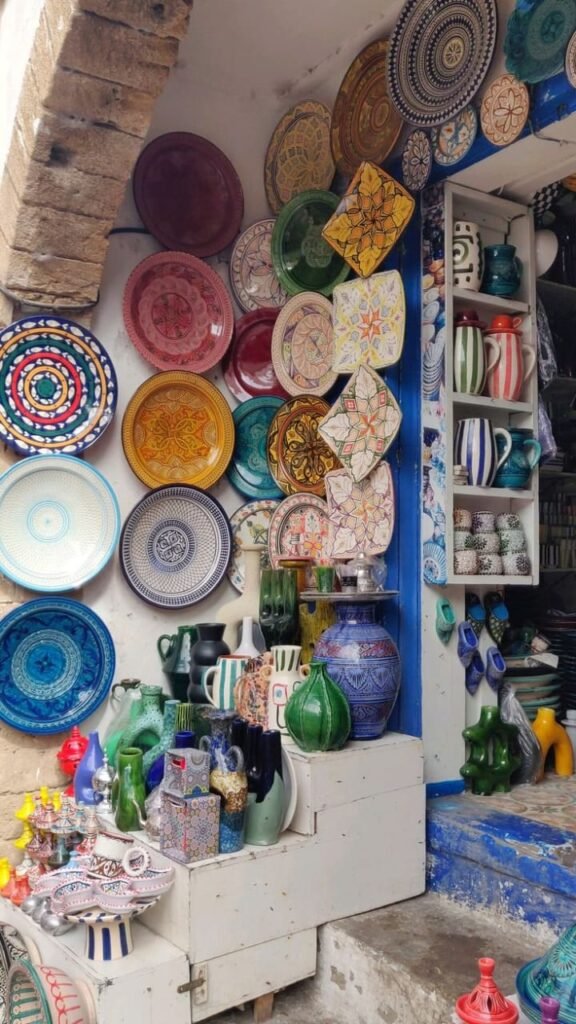
What you’ll actually find: thuya wood items, textiles, artwork from the local galleries, spices, and general handicrafts. It’s a smaller-scale version of Morocco’s souk experience, better suited to picking up a few specific things than losing an entire afternoon in an overwhelming market.
10. Watch the Sunset by the Atlantic
Essaouira faces west, so sunsets over open water are a daily feature rather than a special occasion. A few spots work well for this: the beach itself, the Skala de la Kasbah looking out from the ramparts, and the harbor area where the light hits the boats and walls. None of these is definitively “the best” — it depends on whether you want sand, elevation, or activity around you, and it’s worth trying more than one during your stay.
11. Experience Gnawa Music
Gnawa music — with roots tracing back to West African spiritual and musical traditions brought to Morocco — is closely tied to Essaouira’s cultural identity. The city hosts the Gnaoua and World Music Festival, usually held in June, which draws large crowds and turns much of the medina into a stage for several days.
Outside festival dates, Gnawa music isn’t guaranteed, but it isn’t rare either — you may come across musicians playing in the medina or hear it in certain cafés and restaurants. If seeing a live performance matters to you, timing a visit around the festival is the more reliable option; the rest of the year, it’s more a matter of chance.
12. Take a Horse or Camel Ride on the Beach
Horse and camel rides are commonly arranged along Essaouira’s beach, usually through operators working directly on the sand or through your accommodation. As with any animal-based activity, it’s worth choosing an operator that visibly looks after its animals, following the guide’s safety instructions, and not feeling obligated to go longer or further than you’re comfortable with. It’s a pleasant way to see the coastline from a different angle, without needing to oversell it beyond that.
13. Visit the Argan Country Around Essaouira
The countryside around Essaouira is argan tree territory, and a number of women’s cooperatives in the surrounding area press argan oil using traditional methods, some open to visitors who want to see the process and buy oil or cosmetic products directly. It’s a reasonable half-day option if you have extra time and want to see the rural landscape beyond the coast, rather than staying entirely within the city.
What to Do in Essaouira in One Day
If you’re visiting as a day trip, here’s a realistic way to structure it:
Morning: Start in the medina before it gets busy, then walk the Skala de la Kasbah for the ramparts and cannon views, and head down to the port to see the boats and the day’s catch.
Lunch: Grilled fish or seafood at the port stalls, or a sit-down restaurant nearby.
Afternoon: Time on the beach, a walk through the souks, and a stop at one or two galleries if art interests you.
Evening: Catch the sunset from the ramparts or the beach before heading back, with a relaxed dinner if your schedule allows.
One day is genuinely enough to cover Essaouira’s highlights — the medina, ramparts, port, and beach — but it doesn’t leave room for water sports, day trips to Sidi Kaouki or the argan cooperatives, or much unstructured time. It’s a highlights visit, not a full experience of the place.
What to Do in Essaouira in 2 Days
Two days changes the pace considerably.
Day 1: Cover the medina, ramparts, port, and beach at a slower pace than the one-day version, with time to actually sit in a café rather than just pass through.
Day 2: Use the extra day for whatever didn’t fit before — a surfing or kitesurfing lesson, more time in the souks and galleries, a proper seafood lunch without rushing, or a short trip out to Sidi Kaouki or an argan cooperative.
The main difference isn’t seeing more things — it’s not feeling rushed while seeing the same things, plus room for one activity (water sports, a day trip, more gallery time) that a single day doesn’t really allow.
Is Essaouira Worth Visiting?
For most travelers building a Morocco itinerary, yes — Essaouira offers something genuinely different from the inland cities: an Atlantic coastline, a historic medina at a smaller and calmer scale than Marrakech or Fes, real seafood, an active arts scene, and options for surfing or windsurfing if that interests you.
It’s less essential for a few specific travelers: those focused entirely on a Sahara-and-mountains itinerary with no coastal element, those with very limited time who’d rather spend every day in Marrakech or Fes, and travelers who specifically dislike wind, since it’s a near-constant feature of Essaouira’s coastline. For most others, it’s a reasonable and often welcome change of pace partway through a Morocco trip.
Can You Visit Essaouira as a Day Trip From Marrakech?
Yes, this is a common way to see the city, and Essaouira is a well-established day trip destination from Marrakech, reachable by road.
As a day trip, it works well for travelers with limited time in Morocco overall, letting you see the medina, port, ramparts, and beach without giving up a night of your Marrakech stay.
As an overnight stay, you get to experience the city after the day-trip crowds head back to Marrakech in the late afternoon — the medina noticeably quiets down — and you have time for activities a single day doesn’t fit, like a surfing lesson or an unhurried seafood dinner. If your schedule allows even one night, it changes the experience meaningfully compared to a same-day round trip.
Best Time to Visit Essaouira
Spring tends to offer comfortable conditions for walking around the medina and ramparts without extreme heat.
Summer is popular for the coast and generally warmer weather, though the wind is often more noticeable during these months, which is part of why it’s peak season for water sports.
Autumn is a solid stretch for exploring both the city and the surrounding countryside, with conditions generally easing from summer’s wind.
Winter is cooler and can bring stronger, more unpredictable wind and occasional rain, though the medina itself is still very walkable.
There isn’t a single perfect month for every traveler — it depends on whether you’re prioritizing calm conditions for sightseeing or wind for water sports.
Is Essaouira Good for Couples?
Essaouira suits couples who want a slower, more walkable experience than Marrakech offers. Wandering the medina without a fixed plan, sharing a seafood meal by the port, watching the sunset from the ramparts, and browsing galleries together all fit naturally into a couple’s pace here. It’s not a place built around grand romantic gestures — it works better as a low-key, unhurried stop than as a destination with a specific “romantic” checklist to complete.
Practical Tips for Visiting Essaouira
- Bring a light jacket — the coastal wind can make even sunny days feel cooler than expected.
- Wear comfortable shoes, since the medina’s streets are uneven in places.
- Protect yourself from the sun, particularly on the beach and ramparts where there’s little shade.
- Carry some cash for smaller purchases in the souks and at port food stalls, where card payment isn’t always available.
- Check weather and sea conditions before any water activity, since wind strength changes day to day.
- Use an established instructor or school for surfing, windsurfing, or kitesurfing, especially if you’re new to it.
- Give yourself enough time to actually sit still in a café or on the ramparts rather than rushing between every attraction on a list.
FAQ
What are the best things to do in Essaouira, Morocco? The medina, the ramparts and Skala de la Kasbah, the fishing port, the beach, and trying fresh seafood cover the essentials. Water sports, galleries, and the souks round things out if you have more time.
What is there to do in Essaouira at night? Evenings are generally quieter than in Marrakech. Expect a relaxed dinner, a walk along the ramparts or through a mostly emptied-out medina, and occasional live music, particularly around festival dates.
Are there unique things to do in Essaouira? The combination of an active fishing port, thuya woodworking, and Gnawa music sets it apart from other Moroccan cities — none of these are unique in isolation, but the mix is specific to Essaouira.
What can you do in Essaouira when it rains? The medina’s covered souk sections, art galleries, and the Sidi Mohamed Ben Abdallah Museum all work as indoor options, along with sitting out the weather in a café.
How do you get from Essaouira to Marrakech? The two cities are connected by road, commonly covered by grand taxi, bus, or private transfer, and it’s one of the more frequently traveled routes in the region.
Is Essaouira’s beach good for swimming? It’s usable, but conditions vary with the wind and surf. It’s better suited to walking, sunset views, and water sports than calm, resort-style swimming.
What’s the medina like compared to other Moroccan medinas? Smaller and more orderly than Marrakech or Fes, with a grid-like layout that’s easier to navigate, though still full of the narrow streets and workshops typical of a historic Moroccan old town.
What can you buy at Essaouira’s market? Thuya wood items, textiles, artwork, spices, and general handicrafts, along with fresh produce and seafood in the market areas used by locals.
Planning Your Essaouira Visit
Essaouira fits into a Morocco itinerary in a few different ways: as a day trip from Marrakech if your time is tight, as a one-night stop to catch the city after the day-trippers leave, as a two-day coastal stay if you want time for the beach and water sports, or as one stop within a longer loop around the country. There’s no single correct way to fit it in — it depends on how much of your trip you want to spend on the coast versus inland.
If you’re mapping out where Essaouira fits into a broader Morocco route, it’s worth looking at how it pairs with a Marrakech-based itinerary or a wider coastal route before locking in your dates.
[…] artículo está pensado para ayudarte a entender qué esperar realmente de un viaje organizado a Marruecos, qué diferencias existen entre un circuito estándar, uno privado y uno de lujo, y qué revisar […]
[…] Essaouira — a smaller coastal town, but well used to visitors, with restaurants and bars serving alcohol, plus a well-known local vineyard region nearby […]