1. Beyond the Instagram Filter
You have seen the photos. A lone camel silhouetted against a blood-orange horizon. A Berber tent glowing under a sky crammed with stars. The whisper of sand dunes stretching to infinity. The Marrakech to Merzouga desert tour is one of the most iconic journeys in all of North Africa — and for very good reason.
But here is the truth most travel blogs skip over: this is also a trip defined by gruelling 8–10-hour driving days, a highly orchestrated tourist trail, and a relentless series of souvenir shops disguised as cultural stops.
This guide is different. It combines hard data on costs, frank warnings about common scams, photographer-tested tips for capturing the perfect shot, and everything you need to turn a good trip into an unforgettable one. Consider it your cheat sheet before you book.
2. Why Merzouga? Erg Chebbi vs. The Rest
Morocco has several desert destinations — Zagora is closer to Marrakech (only 5 hours), and the Agafay Desert sits just 40 minutes from the city. So why make the full push to Merzouga?
The answer is Erg Chebbi. These are the golden dunes that define the Sahara postcard — towering, shifting mountains of sand that rise suddenly and dramatically from the flat, stony hamada (rocky desert plateau) surrounding them. At their peak they reach over 150 metres in height, and their sheer scale simply cannot be replicated at Zagora or Agafay.
If you want the real Sahara experience — the kind that stops your breath and makes you feel genuinely small — Merzouga is the destination. The Marrakech to Merzouga journey is longer and more demanding, but the payoff is in a completely different league.
3. The Big Decision: Shared vs. Private Tours
Before you book anything, you need to settle one fundamental question: shared tour or private tour? The answer will shape almost every aspect of your experience.
Shared Tours
The budget-friendly choice at approximately $80–100 USD (800–1,000 MAD) per person. You share a minibus with 8–14 strangers, follow a fixed itinerary, and keep to a set schedule. The upside? It is genuinely sociable — many solo travellers make lifelong friends. The downside is limited flexibility and the potential for a cramped, rushed experience.
Private Tours
More expensive, but a fundamentally different trip. You travel in a comfortable 4×4, stop where you want, linger as long as you like, and receive personalised attention from your guide. Ideal for couples, families, and photographers who need time to set up shots.
Shared vs. Private: At a Glance
| Shared Tour | Private Tour | |
| Cost | ~$80–100 USD / 800–1000 MAD | ~$200–400 USD / 2000–4000 MAD |
| Comfort | Minibus, fixed seats | 4×4 vehicle, spacious |
| Flexibility | Fixed stops & schedule | Adapt stops, pace & detours |
| Group Size | 8–14 people | Just you (or your group) |
| Best For | Solo travelers & socializers | Couples, families & photographers |

4. Choosing Your Tier: Budget, Mid-Range, or Luxury?
Within both shared and private categories, tours are further divided into tiers. Understanding what each level actually delivers will save you from disappointment — or from overspending.
Budget (1,200–1,800 MAD)
Basic desert camps, larger group sizes, and guides who are functional rather than inspiring. Expect thin mattresses, shared washing facilities (or none at all), and a no-frills dinner around the fire. A perfectly valid choice if you are travelling on a tight budget and the bones of the experience matter more than the creature comforts.
Mid-Range (1,950–3,250 MAD) — The Sweet Spot
The tier most experienced Morocco travellers recommend. You get professional organisation, a camp with proper beds and clean shared bathrooms, a better-quality dinner, and a guide with real knowledge. This is where the experience starts to feel genuinely magical rather than merely adequate.
Luxury (4,550–7,800+ MAD)
Private en-suite bathrooms, gourmet Moroccan cuisine, premium camp furnishings, and expert, bilingual guides. Many travellers who splurge on this tier describe it as surprisingly good value — the private shower alone, after two days of desert dust, is a revelation. If you can stretch the budget, this tier is worth serious consideration.

5. The Optimised 3-Day Itinerary: The Sweet Spot
Three days is the minimum recommended duration for a Marrakech-to-Merzouga tour that doesn’t feel like a relay race. Here is how those three days typically break down.
Day 1: The Mountain Crossing
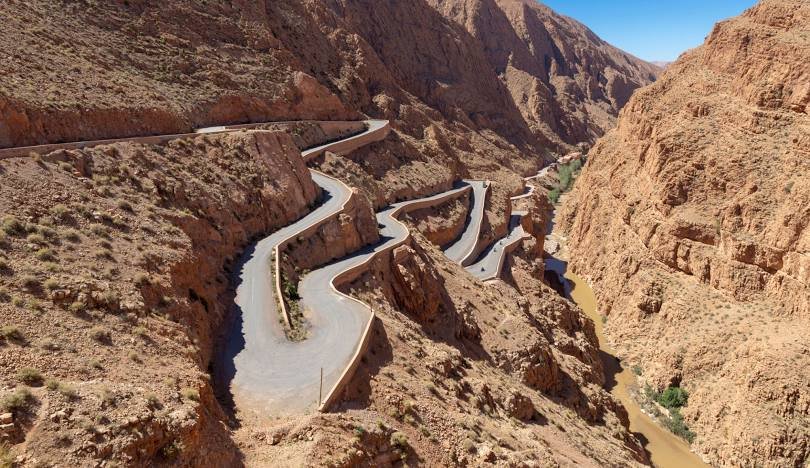
Depart Marrakech early (around 7am) and head south via the dramatic Tizi n’Tichka Pass, which crests at 2,260 metres above sea level. The road winds through the High Atlas Mountains with views that are genuinely staggering — keep your camera ready.
The unmissable stop is Aït Ben Haddou, a UNESCO World Heritage Site and one of the best-preserved ksar (fortified village) complexes in Morocco. You will recognise it immediately: this is where Gladiator, Game of Thrones, and The Mummy were filmed. Allow at least 90 minutes here. Continue to the Dades Valley for your overnight stay.
Day 2: Into the Dunes
Morning brings Todra Gorge — a spectacular slot canyon where 300-metre-high cliffs press in so close you can almost touch both sides simultaneously. Then it is on to Merzouga, arriving in the late afternoon for the centrepiece of your marrakech to merzouga tour.
Hour-by-Hour: The Desert Day
- 4:30 PM — Arrive at Merzouga base camp. Check in, change, and prepare.
- 5:00 PM — Camel trek begins (40–75 minutes into the dunes). Sunset timing is everything here.
- 6:30 PM — Arrive at camp. Mint tea, settle in.
- 8:00 PM — Dinner around the campfire with Berber music and drumming.
- 10:00 PM — Stargazing. The Milky Way is, with no light pollution for miles, genuinely breathtaking.
Day 3: The Long Road Back
Rise before dawn (around 5:30am) for the sunrise over the dunes. It is the defining image of the Sahara, and it is earned. After breakfast, the return journey to Marrakech takes 8–9 hours, typically stopping at the same or similar points as Day 1. Budget your energy accordingly.
6. The Truth Section: What No One Tells You
In the spirit of this being an honest guide, here are the things most marrakech to merzouga tour operators would rather you did not know in advance.
The Endless Sales Pitch
Your itinerary will include ‘cultural stops’ at rug cooperatives, fossil and mineral factories, and Berber argan oil or spice shops. These are commission stops where your driver earns a fee for every tourist delivered. You are under no obligation to buy anything, but the social pressure can be significant. A polite but firm ‘just looking, thank you’ goes a long way.
Tipping Fatigue
Budget for tips at every major attraction: the official guide at Aït Ben Haddou (20–50 MAD), the camel handler at Merzouga (50–100 MAD), the camp musician, your main driver-guide (100–200 MAD for the trip). None of this is included in your tour price, and it adds up quickly.
The Tourist Trap Lunch Problem
Many tours stop at designated ‘tourist restaurants’ along the route — typically charging 10–15 Euros for a mediocre set menu in a near-empty dining room.
💡 PRO TIP: Scan the road on either side of your designated stop. There are almost always smaller, local restaurants nearby offering better food for half the price. Ask your guide to stop there instead, or simply walk across the street.
Ethical Concerns to Note
Camels used for tourist treks can show signs of fatigue, particularly during peak season. If animal welfare matters to you, opt for morning rides (cooler and generally shorter) or ask your operator specifically about their camel welfare policy. Some reputable operators now offer 4×4 transfers into the dunes as an alternative — arguably a better experience for sunset photography anyway.
7. Essential Packing & Survival Tips
The Sahara will test your kit. Here is what the desert actually demands.
- Clothing: Pack layers obsessively. Daytime temperatures in spring can reach 30°C+; desert nights in the same season can drop to 5°C. Both experiences can happen within 12 hours.
- The headscarf hack: Buy a pashmina or Berber turban in the Marrakech medina (approximately $2–3 USD) before departure. The same item sells for $15–20 USD at desert-side shops.
- Tech prep: Tent USB charging points are common but slow. Bring a power bank charged to full and treat your devices as if they will not charge at all overnight.
- Toiletries reality: Pack wet wipes, hand sanitiser, and a small roll of toilet paper. Camp toilet facilities range from adequate to non-existent depending on your tier.
- Footwear: Sandals are romantic but impractical for climbing dunes. Bring closed-toe shoes or light trainers for the actual sand work.
8. When to Go: A Seasonal Breakdown
Timing your Marrakech to Merzouga trip correctly can make the difference between an extraordinary experience and a genuinely miserable one.
| Season | Months | Pros | Cons |
| Spring ⭐ | Mar – May | Mild temps (15–28°C), wildflowers, clear skies | Popular — book ahead |
| Summer | Jun – Aug | Long daylight hours | Extreme heat (45°C+), exhausting |
| Autumn ⭐ | Sep – Nov | Comfortable temps, fewer crowds | Occasional dust storms |
| Winter | Dec – Feb | Quiet, dramatic skies, cheap prices | Sub-zero nights, cold camp |
For most travellers, October is the single best month — post-summer crowds, pre-winter cold, golden light, and warm (but not punishing) daytime temperatures. March is an excellent spring alternative.
9. Budgeting: The Real Cost
Your quoted tour price is a starting point, not a final number. Here is what you actually need to budget for a 3-day marrakech to merzouga tour:
Included in most tours:
- Transport (Marrakech pick-up and drop-off)
- Accommodation (riad or hotel Night 1, desert camp Night 2)
- Camel trek (one way into the dunes)
- Dinner at camp and breakfast on Day 3
NOT included — budget separately:
- Lunches on all three days (budget 80–150 MAD per person per meal at tourist restaurants, less locally)
- Entry fees: Aït Ben Haddou (10–30 MAD depending on guide), Todra Gorge (free but guide tips expected)
- Tips throughout (budget 300–500 MAD total for a 3-day trip)
- Drinks and snacks beyond what is served at camp
- Optional extras (sandboarding, quad bikes at Merzouga: 200–400 MAD)
💡 SOLO TRAVELLER TIP: If you want a private vehicle but cannot cover the full cost alone, post in Morocco travel Facebook groups or hostel noticeboards in Marrakech 1–2 days before departure. Splitting a private tour 3–4 ways often costs the same as a shared tour but delivers the full private experience.
For reference, an excellent mid-range private 3-day Marrakech to Merzouga tour with a reputable operator currently sits at approximately €150–220 per person when shared between two people. Solo, expect to pay €250–350 for equivalent quality.
For further guidance on Morocco travel planning, the Lonely Planet Morocco guide remains an excellent and regularly updated resource.
10. Final Verdict: Is the Marrakech to Merzouga Desert Tour Worth It?
Here is the honest answer: yes, with clear eyes.
The driving is gruelling — make no mistake about that. The tourist machinery is visible and sometimes exhausting. The commission stops are tedious. The return journey on Day 3 is essentially a day lost to the road.
And yet. There is a moment on your camel trek, somewhere between the last ridge and the camp, when the engine noise of the highway disappears entirely and is replaced by the most complete silence you have ever experienced. The dunes glow amber and rose. The sky overhead is the deepest blue you have ever seen. And later that night, flat on your back outside your tent, the Milky Way