Can You Drink Alcohol in Morocco
Yes — alcohol is legal in Morocco for tourists and non-Muslim residents aged 18 and over. You can buy and drink it at licensed hotels, restaurants, bars, and select supermarkets across the country. What trips up first-time visitors isn’t whether they can drink, but where. Morocco is a Muslim-majority country, and while foreigners face no legal restriction on consuming alcohol, its sale to Moroccan Muslims is technically prohibited under national law, and public drinking is not tolerated. So the honest answer has two parts: yes, legally, in the right settings — and no, not casually on the street or in most local neighborhood spots. Understanding that distinction will save you an awkward moment and keep your trip running smoothly.
Can You Drink Alcohol in Morocco?
Yes. Alcohol is legal in Morocco, and there’s no law preventing a tourist from ordering a beer with dinner or a glass of wine at a hotel bar. Morocco even produces its own wine and beer domestically.
The nuance sits in Moroccan law itself: Article 281 of the Penal Code technically restricts the sale of alcohol to Muslim citizens, while foreigners and non-Muslim residents are exempt. In practice, this rule is rarely enforced against visitors — nobody is going to ask about your religion at a hotel bar or licensed supermarket.
What matters far more than religion is licensing and location. Alcohol can only legally be sold and served by establishments holding the proper license, and it should be consumed on licensed premises or in private, not out in the open. So the real question isn’t “can I drink,” it’s “am I somewhere I’m allowed to.”
Can Tourists Buy Alcohol in Morocco?
Tourists can buy alcohol without a permit, ID check, or special documentation in most cases — but only from licensed sellers, and those aren’t on every street corner.
Common places to buy include:
- Supermarket chains like Carrefour, which typically have a separate, sometimes curtained-off section for beer, wine, and spirits
- Specialized liquor shops (“caves”), found mainly in bigger cities, generally open during set daytime hours
- Hotels and resorts, many of which sell alcohol through their own bars or minibars
- Licensed restaurants and bars, where it’s served rather than sold to take away
Not every supermarket carries alcohol — some smaller chains and local convenience stores don’t sell it at all, and you won’t find it in most corner shops or in the medina. Availability is genuinely tied to the individual establishment’s license, so it’s worth checking ahead rather than assuming.
Where Can You Drink Alcohol in Morocco?
Hotels and Resorts
Most mid-range and upscale hotels, especially those used by international tourists, hold a license to serve alcohol through their bars, restaurants, or poolside lounges. This is the most reliable and low-friction way to have a drink almost anywhere in the country.
Restaurants
Some restaurants — particularly those in tourist-facing neighborhoods — serve beer, wine, and spirits alongside meals. Plenty of others, especially smaller, family-run, or more traditional spots, don’t serve alcohol at all. It’s not a given, so check the menu or ask before you sit down if it matters to you.
Bars and Nightclubs
Licensed bars and nightclubs exist in major cities and tourist hubs, from craft beer spots to rooftop lounges and clubs. These operate openly within their license and are a normal part of the nightlife scene in places like Casablanca and Marrakech.
Private Accommodation
Drinking privately in your hotel room, a rented riad, or a private residence is generally treated very differently from drinking in public. Some riads allow guests to bring their own bottle for a private dinner if you ask in advance. The key distinction throughout Morocco isn’t really about the drink itself; it’s about visibility: private and licensed consumption is accepted, open public consumption is not.
Can You Drink Alcohol in Marrakech?
Yes, Marrakech is one of the easiest cities in Morocco to find a drink. Tourist hotels, resorts, and many riads outside the old medina serve alcohol, and Gueliz — the newer part of the city — has a solid concentration of licensed bars, restaurants, and rooftop lounges.
That said, don’t assume alcohol is available everywhere, especially inside the Medina itself. Many riads and restaurants within the old city walls are unlicensed, and you’ll find alcohol far less visible there than in Gueliz or at larger hotel complexes. If a drink is part of your evening plans, it’s worth checking a venue’s license or reputation ahead of time, particularly for smaller guesthouses.
Can You Drink Alcohol in Other Moroccan Cities?
Alcohol availability comes down to individual licensing far more than which city you’re in, but tourist infrastructure does make a difference:
- Casablanca — Morocco’s largest and most cosmopolitan city, with a strong bar and restaurant scene
- Agadir — a beach resort destination with hotel bars and licensed venues aimed at tourists
- Essaouira — a smaller coastal town, but well used to visitors, with restaurants and bars serving alcohol, plus a well-known local vineyard region nearby
- Tangier — a port city with a long history of cosmopolitan nightlife and licensed venues
- Fes — more traditional in character, with fewer licensed spots, generally concentrated in newer hotel areas rather than the old medina
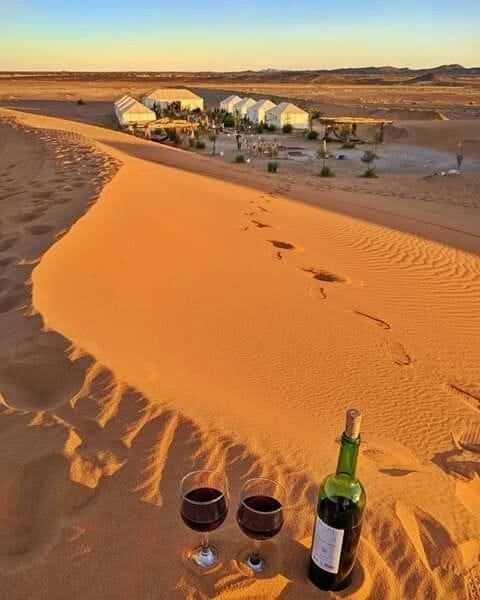
- Merzouga — a desert gateway town where alcohol is far less consistently available; some luxury desert camps serve it, but standard camps typically don’t
The pattern holds everywhere: bigger, more tourist-oriented venues are your best bet, and smaller or more traditional towns will have noticeably less on offer.
Can You Drink Alcohol in Public in Morocco?
No — and this is the rule that catches visitors off guard more than any other. Drinking in public spaces, including streets, squares, parks, and most beaches, is not accepted and can create real problems with local authorities. This applies even though buying and drinking alcohol in the right setting is completely legal.
A few practical guidelines:
- Keep drinking inside licensed venues, hotels, or private accommodation
- Don’t carry open containers on the street
- Avoid drinking on public beaches unless you’re at a beach club or resort specifically set up for it
- Never let a drink turn into visible public intoxication — this is taken seriously
- Follow whatever house rules a bar, restaurant, or riad sets, since individual venues sometimes have their own added restrictions
This isn’t about judgment; it’s simply how the local legal and cultural framework works. Treat alcohol the way you’d treat any behavior that’s fine behind closed doors but out of place in open public view, and you won’t run into trouble.
Frequently Asked Questions
Can you drink alcohol in Morocco?
Yes. It’s legal for tourists and non-Muslim residents aged 18 and over, available at licensed hotels, bars, restaurants, and select shops.
Can you drink in Morocco as a tourist?
Yes, tourists face no legal restrictions on consuming alcohol, as long as it’s bought from and consumed at licensed venues, not in public.
Can you buy alcohol in Morocco?
Yes, from licensed supermarkets, specialized liquor shops, hotels, and some restaurants and bars. Not every store carries it, so availability depends on the specific venue.
Is alcohol legal in Morocco?
Yes, alcohol is legal and produced domestically, though its sale is regulated through a licensing system, and Moroccan law technically restricts sales to Muslim citizens while exempting foreigners.
Can you drink alcohol in Marrakech?
Yes, particularly in tourist hotels, riads outside the medina, and licensed restaurants and bars in areas like Gueliz. Availability is more limited inside the old Medina.
Can you drink alcohol in hotels in Morocco?
Yes, most hotels catering to international travelers, especially 3-star and above, hold a license to serve alcohol through their bars or restaurants.
Can you drink alcohol during Ramadan in Morocco?
Tourists can generally still drink during Ramadan, but availability drops noticeably — supermarket alcohol sections often close for the month, some bars reduce hours or shut during the day, and licensed venues tend to serve more discreetly. Because Ramadan dates shift each year on the Islamic calendar, check the current dates for your travel period and confirm policies with your hotel before you go, as rules and enforcement can vary by year and location.
Can you buy beer and wine in Morocco?
Yes, Morocco produces its own beer and wine domestically, and both are widely available at licensed shops, supermarkets, and venues in tourist areas.
Can you drink alcohol in public in Morocco?
No, drinking in public spaces like streets, squares, and most beaches isn’t accepted and can lead to problems with local authorities. Keep drinking to licensed venues or private settings.
Can tourists bring alcohol into Morocco?
There are duty-free allowances for bringing alcohol into Morocco, but limits and rules can change and are enforced at the border. Check the current customs regulations directly with Moroccan customs authorities or your airline before you travel, rather than relying on general guides.
Travel Tips for Visiting Morocco
- Respect local customs, especially around dress, public behavior, and religious observance — this matters far more in Morocco than in many other travel destinations
- Check hotel and riad policies on alcohol before you book if it’s important to your trip, since not all accommodation serves or allows it
- Carry Moroccan dirhams for smaller purchases, as not every shop or venue takes cards
- Keep important documents secure, including your passport, since you may need ID for some purchases
- Dress appropriately for the location, particularly outside major tourist zones and around religious sites
- Use licensed transportation rather than unmarked taxis, especially at night
- Check current entry requirements before you travel, as visa and border rules can change
Planning Your Trip to Morocco
Once you’ve got the basics on drinking sorted, the more interesting question is where to spend your time. Morocco’s variety is the real draw — the medina alleys and rooftop views of Marrakech, the dunes and desert camps around Merzouga, the blue-washed lanes of Chefchaouen, the Atlantic breeze in Essaouira, and the peaks and valleys of the Atlas Mountains, all within a manageable travel radius of each other.
If you’re building out an itinerary, it’s worth looking at a full Morocco travel itinerary or a focused 5-day Morocco itinerary to see how these destinations fit together. For Marrakech specifically, a guide to things to do in Marrakech is a useful starting point, and if the desert is calling, Marrakech desert tours cover the logistics of getting out to Merzouga and back. Beyond that, browsing Morocco tours more broadly is a good way to see how guided options compare to planning it yourself.
Conclusion
So, can you drink alcohol in Morocco? Yes — it’s legal for tourists, available at licensed hotels, restaurants, bars, and select shops, and Morocco even makes its own wine and beer. The part worth remembering is where: keep it to licensed venues or private settings, skip public drinking altogether, and check ahead if you’re traveling during Ramadan or heading somewhere more traditional like the Fes medina or a desert town. Get that part right, and alcohol won’t be something you need to think twice about for the rest of your trip. If you’re still mapping out your route, a look at Morocco’s top itineraries and tours is a solid next step.





[…] countryside around Essaouira is argan tree territory, and a number of women’s cooperatives in the surrounding area press […]
[…] Fes. Upon arrival in Fes, we will drop you off at your hotel or riad, marking the end of your 6-day Morocco […]
[…] without issue. Morocco‘s major cities — Marrakech, Casablanca, Fes, Rabat, Tangier, Agadir, and Essaouira — all […]
[…] visit: It’s Casablanca’s defining landmark and one of the few mosques in Morocco that admits non-Muslim visitors on a guided tour. It sits directly on the Atlantic, with part of […]